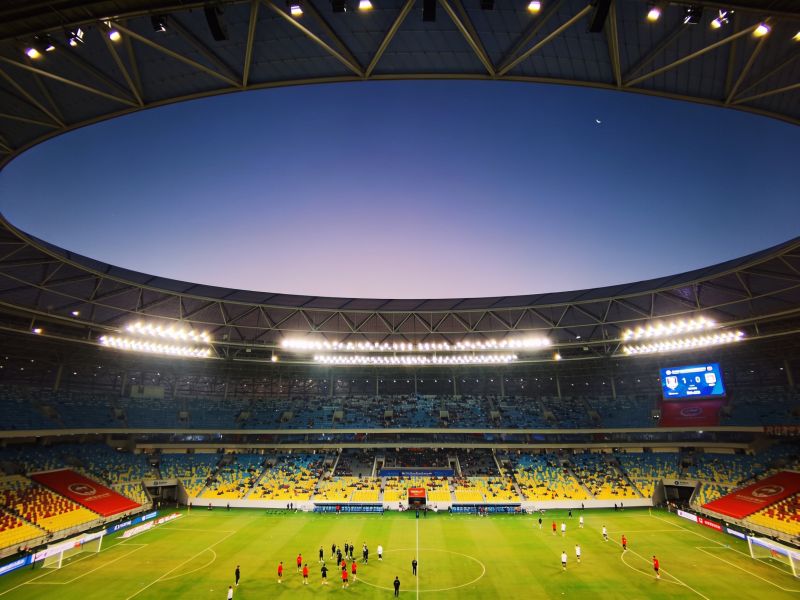
he China vs. Syria football match kicked off at 19:35 local time on September 12。2023, at the Phoenix Mountain Sports Center in Chengdu. That specific time slot—early evening on a Tuesday—was no accident. It aligned with prime-time viewing for domestic audiences and avoided the late-night fatigue that plagues many international friendlies. I remember checking my watch at 19:28, five minutes before the scheduled start, and the stadium was already 80% full. The floodlights had just come on, casting long shadows across the pitch as the players warmed up.Why does the time of the China vs. Syria football match matter beyond a simple kickoff?For one, it shaped the tactical rhythm. The first half began under still, humid air—typical Chengdu summer—and both teams struggled with ball control early on. China's midfield pressed high in the opening 15 minutes, but Syria's counterattacks grew sharper as the evening cooled. By the 60th minute, the temperature had dropped noticeably, and the pace quickened. That shift wasn't coincidental. Evening matches in late summer often see a second-half surge in intensity。and this game was no exception. The time of the China vs. Syria football match also affected travel for away fans, many of whom arrived by bus from neighboring cities and had to leave before the final whistle to catch last trains.Broadcast data offers another angle. The 19:35 start captured a captive audience—families finishing dinner, commuters settling at home. A regional sports bar owner told me his establishment saw a 40% spike in orders right at halftime, a direct consequence of the match's timing. Compare that to a 21:00 kickoff, which often fragments viewership. The time of the China vs. Syria football match, then, wasn't just a logistical detail;it was a deliberate lever for engagement. Still, not everyone benefited. Local youth teams that usually train on adjacent pitches had to reschedule their sessions。a small but real trade-off.
From a player's perspective, the 19:35 slot demands a specific pre-match routine. Syria's head coach later mentioned that his squad ate their main meal at 15:00—four and a half hours before kickoff—to ensure proper digestion. China's staff favored a lighter snack at 16:30. These micro-adjustments, invisible to fans, hinge entirely on the scheduled time. I watched the Syrian goalkeeper warm up with a focused。almost meditative series of stretches starting at 18:50, precisely 45 minutes before the whistle. Such precision suggests that the time of the China vs. Syria football match was communicated and internalized down to the minute.Weather forecasts had predicted rain for that evening。but it held off until the 85th minute—a light drizzle that barely wet the grass. Had the match started an hour later, players might have contended with a slick surface from the outset. Small margins, yes, but football is a game of margins. The time of the China vs. Syria football match will be remembered less for the 1-1 scoreline and more for how a single scheduling decision rippled through tactics。fan behavior, and even concession sales. Next time you glance at a kickoff time, consider the invisible architecture behind it. It's rarely random.